


I’ve been listening to writing podcasts on my daily drives for a year now.
It started when my youngest child was a newborn. My brain was a mushy lump, but still I wanted to take whatever step I could toward the Big Dream. You know, the one where I write a novel.
So, I took the only step I could handle at the time. I listened to Kelly Van Sant and S. Jae-Jones’s Pub(lishing) Crawl and I dreamed.
I haven’t felt confident in my brain’s ability to do any heavy lifting until recently. I’m proud to say that my brain is becoming less mushy and more brain-like by the day. What started as half a podcast at a time has turned into nights reading craft books and mornings watching lectures. While I don’t have a novel in progress yet–and, in fact, I don’t even have a big idea that’s pulling me in–clouds of advice and ideas have been accumulating in my brain like a gassy, dusty nebula of potential.
And this week, a few things have started to coalesce.
Let’s talk about it.
Nebula Dust 1: It’s ok to not be an idea machine.
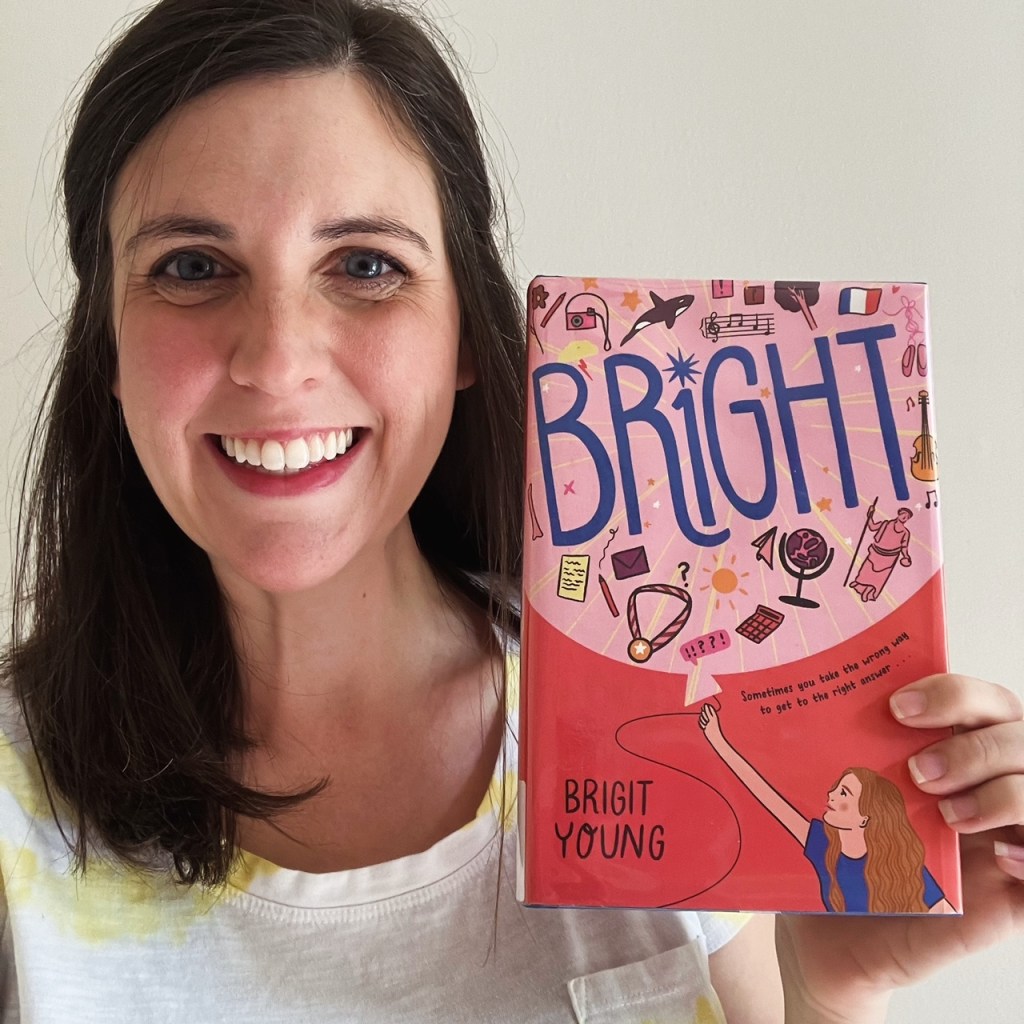
This week I had the pleasure of talking with Brigit Young about her book Bright for Reading Middle Grade‘s Patreon book club. It was a delight, and I’m so grateful Brigit took the time to talk with us! She shared several things that really got my gears turning.
Bright follows loveable eighth-grader Marianne, who–believing she’s just not smart–adopts a bubbly personality to mask how much she’s struggling in school. Marianne is such an empathetic and perceptive person, and everyone in our book club was rooting for her as she joined the Quiz Quest team in an effort to salvage her grades and graduate from middle school.
Brigit Young nailed the emotional heart of this story. Nailed it! I usually read books where the plot is driven by action, adventure, and mystery, so it was fun to see how an experienced writer orchestrates the beats of a quiet contemporary story. She poured so much heart into these pages.
One thing Brigit said during our chat was so simple, it struck me immediately:
“Some authors are like, ‘I get ideas all the time.’ That’s not me at all.”
Hallelujah and thank you Brigit!
Ideas don’t come naturally to me. I never think my ideas are strong enough. It was so refreshing to hear that ideas don’t come naturally to Brigit, either, but clearly that has not stopped her from writing several successful books! I love how she finds one idea that works for her and turns it into something that thousands of kids will love, too. I’m so looking forward to her next book Banned Books, Crop Tops, and Other Bad Influences, coming out September 2024!
She also spent some time talking about the hooks of her books, and how important it is to her process. Which brings us to…
Nebula Dust 2: The hook is everything… and you only need one.
Do you know Jenni Howell? Her debut book Boys with Sharp Teeth–a dark academia YA thriller–is coming out April 2025 and it sounds amazing!
I met her (virtually) through Laini Taylor’s Patreon group, and I just love her.
She has shared her querying journey with the Rooting For U Pod and on her Substack blog, and she could not stress enough how important the hook was in her journey to publication.
After the first two manuscripts she queried didn’t get agented, she decided she needed to switch tack. If she wanted to be successful commercial author, she needed to write a hook that agents and editors would want to invest in.
So, she put on her thinking cap and went on a hook hunt.

“Thankfully, I had some friends who were willing to let me throw pitches at them over and over again, ad nauseum. So that’s what I did for several months, was just try to figure out how to pitch books and come up with ideas, and just refine them and tweak them and dismember them and then refine and tweak and dismember again until I started to figure out what makes something commercial. […] There’s no such thing as your One Book that’s going to make you. It’s you. You are the author. You are the magic. And finding the idea that’s going to break you in, it doesn’t have to be this sacred process.”
Gosh, have I mentioned I love Jenni? I really admire her vision and how she worked to make it happen.
Right now, traditional publication is a dream of a dream for me. But I’ve got a few nebulous ideas I’m kicking around for a book-length project, and it’s fun when I hit on one I think a reader would love. Even if no one ever reads my first project, at least I’m aiming to practice in the right arena.
After all, as editor Sol Stein says, “It has to be a good experience for both partners, the writer and the reader.” And speaking of Sol…
Nebula Dust 3: Writing books are a mixed bag.
Over the past couple weeks, I’ve been working my way through Stein on Writing by long-time editor Sol Stein, as well as James Scott Bell’s masterclass How to Write Best-Selling Fiction, which includes 24 half-hour lectures on Audible and a massive guidebook.
Both books have been informative, but have different approaches to the question that’s been on my mind: Where do I focus first?

Sol very clearly says to come up with a compelling character and then “what they do becomes the story.”
He also very clearly says to NOT start with the plot.
“Some writers of popular and transient fiction begin with a character, but a large percentage who write category books (e.g., adventure, spy, westerns, science fiction, romance novels) start with a plot, then populate it with characters. That method usually results in hackwork, at which some writers have become so skilled that they have made millions with stories that even their devoted readers acknowledge seem ‘made up.’”
Message received, Mr. Stein! I’ll start with the characters!
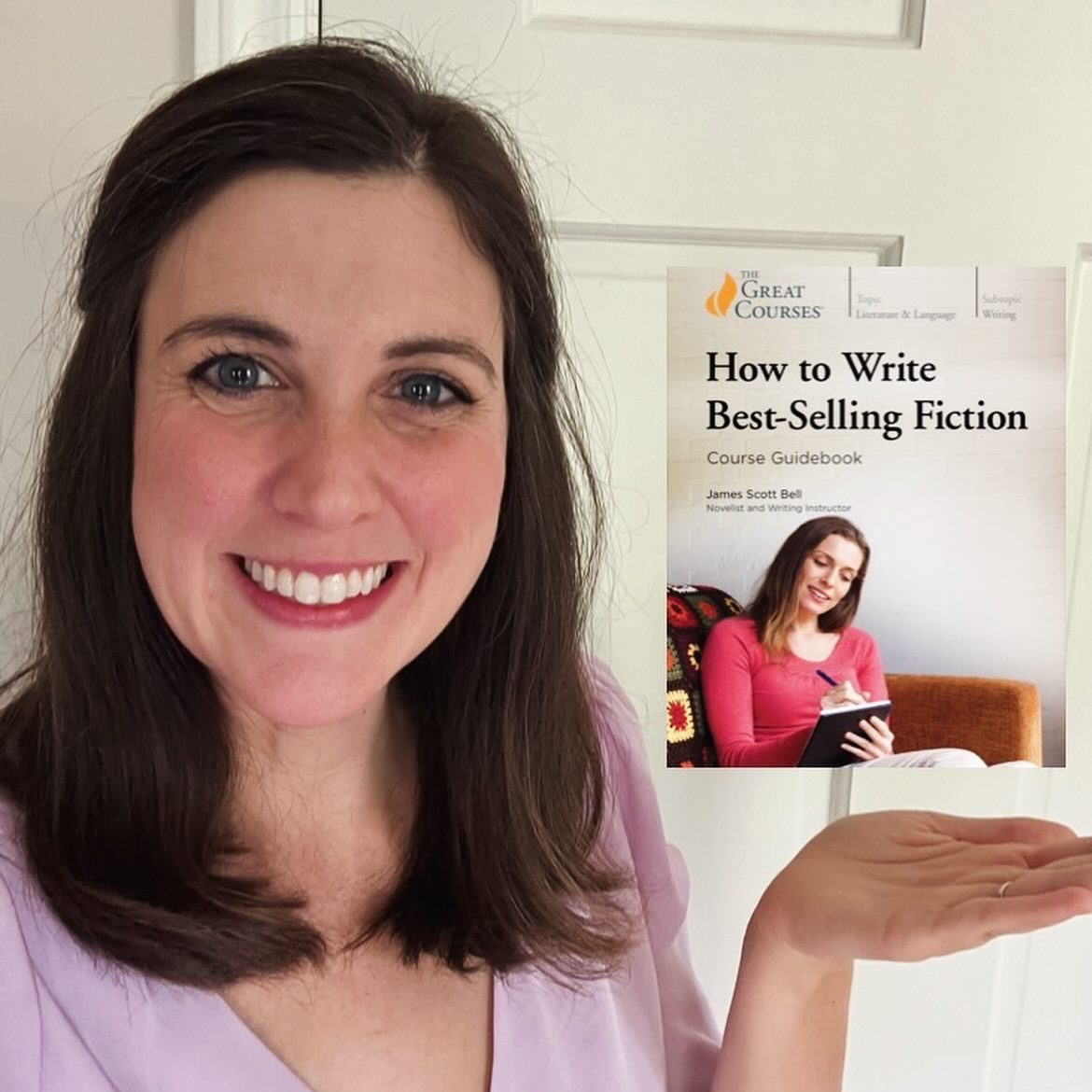
James Scott Bell’s process is to take an idea, research if it’s commercially viable, and then shape it into an elevator pitch. It’s that simple…and that hard!
Looking a little closer, he proposes the L.O.C.K. system (Lead, Obstacle, Confrontation, and Knockout Ending) for assembling all the essential pieces of your novel before you get too far down the road.
For me, I appreciate that Bell holds my hand through the brainstorming process, which I can then combine with Stein’s deep dive on character creation.
And, also, if my ideas are crap, what’s the worst that could happen?
“Reach for the stars, even if you miss, you might become a lucky hack and make millions!” 🙂
To Sum It Up
So here I am, marinating in my nebula cloud, practicing my writing skills, and gathering ideas. TL;DR:
- It’s ok if I’m not brimming with ideas. Not every writer is.
- There is not One Idea that will work. Test a bunch. Write something that feels like a strong contender. My first manuscript will be rough and won’t likely see the light of day, but at least I’ll be practicing the skills that will get me there.
- Read the craft books but only take away what works for you.
Exercise
It’s time for an exercise to think about hooks!
Option 1: Set a timer for ten minutes and come up with some “high concept” hooks. You know, THIS meets THAT. Like Godzilla meets The Great British Bake Off.
Option 2: Set a timer for ten minutes and write down some books and movies you love, condensing them into their one-line commercial hook. Go!
Happy writing!
 juliebruce.com
Leave a comment